
*Disseminated on Behalf of Fort Technology Inc.

FRTT Just Achieved a Nasdaq Listing Which Opens up New Doors For the Company
___________________________________
Hello Everyone,
I hope you were paying attention to our last profile we sent out on Friday. It was a gold company we have been covering it since the $6 level for well over a year. It jumped about 10% from Friday’s open yesterday, hitting 16.69 on very strong interest.
Moving on we have something BRAND NEW that just started trading on the Nasdaq last week.
They operate in a very niche sector with numbers that could add up.
There is nothing glamorous about pest control. The industry exists in the margins of the economy — unglamorous, often invisible, the kind of business that most investors never think about until something skitters across their kitchen floor. But Fort Technology Inc., a seasoned company that has quietly built a two-decade-long presence in pest control and remedial repair products, just made a move that demands attention.
Last Monday when it began trading on the Nasdaq under the ticker symbol FRTT, the company signaled to the investment world that it has ambitions far larger than its niche suggests.
The debut marks a watershed moment for Fort Technology, which has until now been listed exclusively on the TSX Venture Exchange in Toronto. The company isn’t abandoning its Canadian roots — it will maintain its listing there — but it is choosing to play on a much bigger stage, one where the capital is deeper, the institutional investor base is broader, and the potential for growth is exponentially greater. As of 2026, the U.S. stock market has a total market cap of roughly $77.9 trillion, while Canada sits at around $4.5 trillion. That makes the U.S. market roughly 17 times larger than Canada’s.
Let’s put it like this……… U.S. stocks alone added nearly $7 trillion in market value throughout 2025 — meaning America grew by more than Canada’s entire market in a single year. For a company with a market cap hovering around US$46 million pre-listing, it is a bold and deliberate bet on its own future.

To understand why this matters, it helps to understand the Nasdaq Capital Market itself. Often overlooked in favor of its more prestigious siblings — the Nasdaq Global Market and the Nasdaq Global Select Market — the Capital Market tier was built precisely for companies like Fort Technology. It offers emerging businesses a legitimate perch on one of the world’s most recognized exchanges, without demanding the kind of financial scale or earnings history that the upper tiers require. For a small-cap manufacturer still in the process of defining its long-term identity, the Capital Market tier is both an appropriate and strategically shrewd entry point. It provides the credibility of a Nasdaq listing while leaving room to grow into that credibility over time.

The stated rationale from company leadership is straightforward enough: better visibility, improved liquidity, and expanded access to capital. CEO Gabi Kabazo described the listing as a meaningful milestone in the company’s growth strategy — language that, while measured, carries real substance when you unpack what those three objectives actually mean in practice. Visibility is perhaps the most underrated of the three. Being listed on a major U.S. exchange opens Fort Technology’s door to a universe of American institutional investors — pension funds, mutual funds, hedge funds, and family offices — that are often structurally prohibited from owning shares listed on foreign exchanges. Simply by becoming a Nasdaq-listed company, Fort Technology makes itself legible to a category of investor that may have previously been unable to touch it regardless of interest. That’s not a small thing.
Fort Technology’s decision to pursue a dual listing — remaining on the TSX Venture Exchange while adding Nasdaq — is far from unusual among ambitious Canadian companies. It is, in fact, something of a tradition. Canadian firms with serious growth aspirations have long recognized that the domestic market, however well-functioning, simply does not offer the same scale of capital or investor diversity as the U.S. exchanges. The dual-listing approach allows a company to maintain its relationship with Canadian shareholders while simultaneously tapping into the far larger pool of American money. It’s a hedged bet: the company doesn’t have to choose between its past and its future, at least not immediately.
There is also the matter of Nexera Technologies Ltd., which holds approximately 71% of Fort Technology’s outstanding shares. This kind of majority ownership by a single entity is common among smaller companies — and it has both advantages and drawbacks worth examining carefully. On the positive side, Nexera provides Fort Technology with strategic stability. With a dominant majority shareholder controlling the governance agenda, the company is insulated from the short-term pressure that can distort decision-making at more widely-held public companies. There’s a long-term anchor in place, and that can be enormously valuable for a company trying to execute a multi-year growth strategy without getting pulled off course by activist investors or quarterly earnings pressure.
New American investors watching the stock closely will be paying attention to how Nexera’s ownership influences not just trading dynamics but also the company’s strategic direction, its board composition, and its approach to major decisions like acquisitions or capital raises.
Strip away the financial mechanics and what you’re left with is a company that makes pest control products and remedial repair solutions — and has been doing so since 2005. Fort Products Limited, the operating subsidiary, has spent nearly twenty years building expertise in a sector that most people never stop to think about but that everyone, at some level, depends on. The pest control industry occupies a distinctive place in the economic landscape: it is one of those businesses that performs consistently regardless of the broader economic climate. Recessions come and go, technology cycles rise and fall, geopolitical shocks ripple through supply chains — but pests don’t take a year off because interest rates are high. Urbanization continues, global trade continues, climate patterns shift in ways that alter pest population dynamics and geographic ranges, and the demand for effective, safe, and affordable pest control products marches steadily forward.
This steady, non-cyclical quality is precisely why access to capital could be so transformative for a company in Fort Technology’s position. The market it operates in isn’t going anywhere. The question has never really been whether the demand exists — it does, and it will.
MORE ABOUT FRTT
At its core, Fort designs, sources, and sells pest control products across the United Kingdom, Germany, France, Italy, and other European markets, with a US market entry planned.
Unlike a pure marketplace reseller, Fort operates as a principal in its revenue model. That means the company takes on inventory risk and sets its own pricing across its brands and channels — giving it more control over margins, but also more exposure if products don’t move.
The bulk of that selling happens in one place. Roughly 93–98% of revenue flows through Amazon (FBA and FBM). Beyond Amazon, the company’s subsidiary, Fort Products Limited, has maintained a direct presence at fortproducts.co.uk, where its brands have served amateur and professional pest control customers since 2005.
Five Brands, One Specialty

Fort’s portfolio covers the major pest control categories across the UK and Europe — and each brand carries its own seasonal rhythm, which shapes when its revenue tends to land:
Roshield (rodent control): Fort’s largest brand by revenue and its flagship line. Sold to amateur and professional users alike, Roshield grew $1.04M in FY2025 — the single largest brand driver of revenue growth.
Entopest (insect control): Covers the warm-season insect categories that drive second- and third-quarter revenue.
Rempro (damp & remedial repair): Serves customers tackling damp, mould, and related repairs in domestic and small commercial settings, with demand strongest in late autumn and winter.
BirdGo (bird prevention): Focuses on humane bird prevention — gutter spikes, netting, and deterrent kits — with demand peaking around the spring and early-summer nesting season.
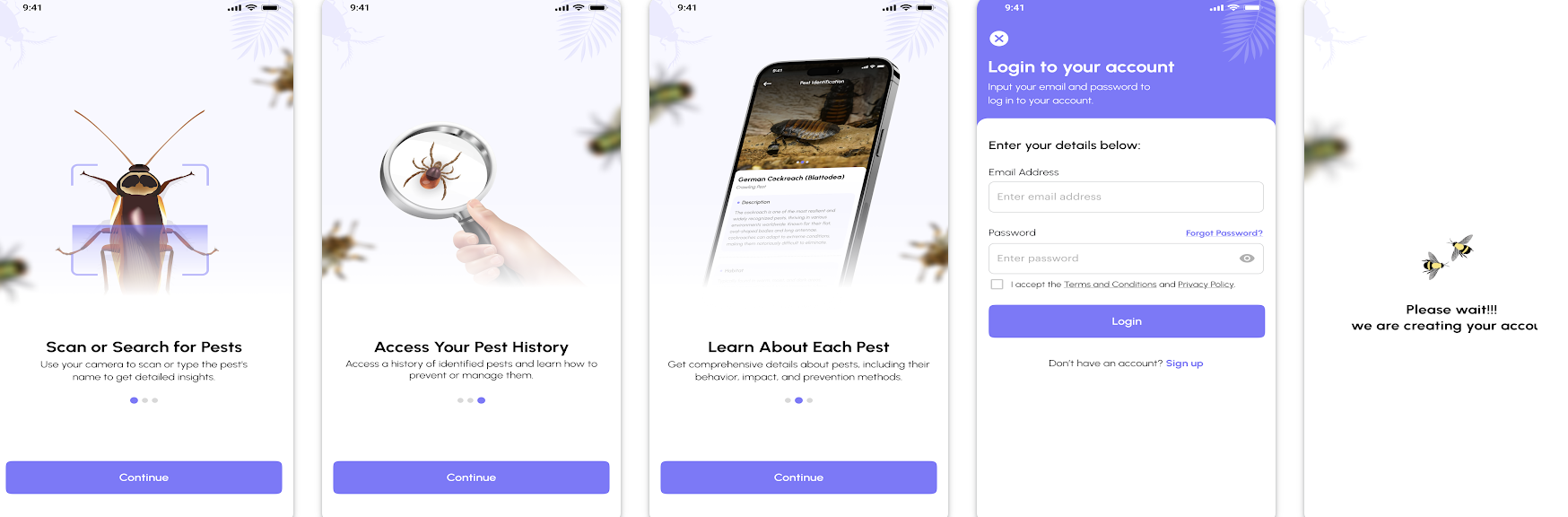
Fort Pest ID (AI mobile app): Launched in 2025, the app identifies common household pests from a single photo and recommends a product or treatment path.
That seasonal spread matters. Because the brands peak at different points in the year, the portfolio is built to generate demand across multiple quarters rather than leaning on a single busy season.
The AI Angle
The Fort Pest ID app is the newest piece of the story, and it does something the physical products can’t.
By letting a customer snap a photo and receive an identification plus a recommended treatment path, the app extends Fort’s brand from physical shelves into customer-facing software. Just as important, the data it generates feeds back into the company’s product development roadmap — helping Fort see which pests customers are actually dealing with. The app is available globally and falls under the EU AI Act for compliance.
How Fort Sources and Operates
Fort runs a white-label sourcing model. Third-party manufacturers in China, the United Kingdom, and Italy produce products to Fort’s specification, with no exclusivity agreements tying the company to a single supplier.
The sourcing mix has shifted meaningfully:
In FY2025, Fort sourced roughly 47% of its products from China and 53% from the United Kingdom.
That marks a substantial diversification from the all-UK base it operated from in 2023.
Final assembly, packing, and distribution take place at two leased warehouses in the United Kingdom.
The operations team is UK-based.
Spreading manufacturing across multiple countries can reduce reliance on any single region — a consideration that has grown more relevant for e-commerce companies navigating shifting trade conditions.

Regulated and Audited
For a small company, Fort carries a fairly substantial corporate and compliance framework:
Product regulation: Compliance with EU and UK Biocidal Products Regulations (BPR) and REACH through its supplier base.
Data & AI: GDPR and UK GDPR for customer-facing tools, plus EU AI Act coverage for the Fort Pest ID app.
With access to U.S. equity markets, Fort Technology can begin to think more seriously about research and development investment in ways that weren’t previously feasible. The pest control industry is undergoing a significant transformation as both consumers and regulators push for more environmentally responsible products. The era of broad-spectrum chemical pesticides applied without much discrimination is giving way to a more sophisticated approach — targeted treatments, biopesticides derived from natural organisms, precision delivery systems that minimize chemical exposure while maximizing effectiveness. Companies that can develop and commercialize the next generation of these products stand to capture substantial market share as the industry evolves. For Fort Technology, capital from U.S. investors could fund exactly this kind of innovation pipeline.
There is also the acquisition angle, which may ultimately be where the most compelling long-term value creation happens. The pest control manufacturing market is highly fragmented. Thousands of smaller, regional companies operate across North America, each with its own customer relationships, product specializations, and geographic footprints. Many of these companies are well-run but undersized — they lack the capital and the management infrastructure to grow beyond their local or regional markets. For a well-capitalized acquirer with a national or continental platform, these companies represent attractive targets. Fort Technology, with the enhanced profile and financial flexibility that a Nasdaq listing can provide, is now at least theoretically positioned to play that consolidation role.
What Fort Technology’s move illustrates, more broadly, is the persistent challenge and opportunity that small-cap Canadian companies face in an increasingly globalized capital market. Canada has no shortage of innovative, well-managed companies operating in sectors with legitimate growth potential. But the Canadian equity market — and particularly the TSX Venture Exchange, which serves as a kind of entrepreneurial springboard for smaller companies — has real limits in terms of the scale of capital it can provide and the breadth of investor interest it can attract. Companies that want to truly scale — that want to move from regional players to continental or global competitors — often find that they need to access U.S. markets at some point in their journey.
Fort Technology has now taken that step. The pest control industry may not be anyone’s idea of a glamorous investment category, but it is a real business with real demand and real competitive dynamics, and a company that can successfully position itself as the leading innovator and consolidator in that space will generate substantial value over time. The Nasdaq listing is not the finish line — it’s a starting point. How Fort Technology uses the capital it can now access, how it builds its American investor base, and how it executes on the strategic opportunities that its improved financial position makes possible — all of that remains to be seen.
MANAGEMENT

SINCERELY,

DISCLAIMER
MicroCapAlerts.io is owned by Dedicated Investors, LLC who is a publisher (the “Publisher”) of favorable information (the “Information”) about publicly traded companies (collectively the “Issuers”) listed on the NASDAQ Stock Exchange (“NASDAQ”), New York Stock Exchange (“NYSE”) and the OTC Markets is a paid advertisement. The Publisher lists its specific compensation at the bottom of this Disclaimer.
The Persons who pay us (“Paying Party”) to publish the Information and their affiliates may hold and control a significant amount of the public float and believe that if potential investors receive favorable information about the Issuers, investors will purchase the Issuers’ shares, including the shares that the Paying Party wants to sell. The Information is neither a solicitation to buy nor an offer to sell securities. The Information is not intended to be used as a source of information for making an investment decision. The Information is not intended and should not be used for trading or investment purposes.
Because the Publisher is paid to disseminate the Information to the public, the Publisher is required by the securities laws, including Section 10(b) of the Securities Exchange Act of 1934 and Rule 10b-5 thereunder, and Section 17(b) of the Securities Act of 1933, as amended (the “Securities Act”), to specifically disclose certain information to you regarding its compensation, including the nature and amount of compensation. The Paying Party and its affiliates may engage in buying and selling of the Issuers’ securities before, during and after the Publication of the Information.
The Information provides de minimis information about the Issuers and is only a brief favorable snapshot of the Issuers subject to the Information. The Information consists of only positive content and does not include any negative information about the Issuers whatsoever; accordingly, you should consider the Information to be one-sided and not balanced, complete, accurate, truthful or reliable. The Publisher is not liable for your use of the Information or any success or failure that is directly or indirectly related to your use of the Information, including misinformation, omissions, errors or delays in providing or updating the Information, or for any actions taken by third parties in reliance upon the Information.
The Publisher is not objective or independent, and its publishing of the Information involves actual and material conflicts of interest, including: (i) the Publisher is paid to publish favorable information about the Issuers; (ii) the Publisher does not publish negative information because it is not paid to do so; and (iii) the Publisher is paid to publish the (favorable) Information about the Issuers advising others, including you, to purchase the Issuers’ securities; and while doing so, the Paying Party may plan to sell their shares of the Issuers.
The Information published by the Publisher may recommend that investors buy the Issuers’ shares while the Paying Party and/or their affiliates sell their shares of the Issuers. When the Paying Party sells their shares, the Issuers’ stock price may decline and thereby dramatically reduce the price at which investors can sell their shares. As such, investors who purchase the Issuers’ shares during the Publication of the Information will likely pay inflated prices. The Paying Party may sell the Issuers’ securities for less than the target prices set forth in the Information. The Paying Party and its affiliates may make substantial profits by selling their securities during the Publication of the Information while investors experience losses.
The Publisher makes no warranty or representation about the Information, including its completeness, accuracy, truthfulness or reliability, and disclaims, expressly and impliedly, all warranties of any kind, including whether the Information is complete, accurate, truthful, or reliable and as such, your use of the information is at your own risk. The Information is provided “as is” without any warranties of any kind without limitation. The Publisher does not verify or confirm any portion of the Information and does not conduct any due diligence or research on any aspect of the Information, including the completeness, accuracy, truthfulness or reliability of the Information.
Investors should not rely upon the Information for any purpose and should contact a licensed investment advisor and their legal advisor and review all documents about the Issuers with the assistance of such advisors, including documents publicly filed on www.sec.gov and http://www.OTCMarkets.com to obtain information about the Issuers.
Before investing in any public company, you should conduct your own in-depth investigation with the assistance of your legal, tax and investment advisors of the Issuers’ financial condition, operations, management, products or services, trends in the industry, the Issuers’ trading history, short sale positions and risks that may be material to its business and other information you and your advisors deem material to an investment decision. This investigation should include, but not be limited to, a review of available public sources and information you receive directly from http://www.OTCMarkets.com and www.sec.gov.
The Publisher is not and does not act in the capacity of any of the following and is not qualified to do so; as such, you should not construe the Publisher’s activities as involving any of the following:
▪ An independent advisor or consultant;
▪ Providing investment advice or acting in the capacity of an investment adviser or engaging in activities that would be deemed to be providing investment advice that requires registration either at the federal or state level;
▪ Broker-dealer activities or acting in the capacity of a registered representative or broker;
▪ Stock picker;
▪ Securities trading expert;
▪ Securities researcher or analyst;
▪ Financial planner or financial planning;
▪ Provider of stock recommendations;
▪ Provider of advice about buying and selling or holding recommendations as to specific securities; or
▪ Making an offer or sale of securities or solicitation to purchase securities.
An investment in the Issuers involves a high degree of risk and uncertainties and may be subject to extreme volume and price volatility, especially during the Publication of the Information. Favorable past performance of the Issuers does not guarantee future results. If you purchase the securities of the Issuers, you should be prepared to lose your entire investment. Some of the risks involved in purchasing securities of the Issuers include but are not limited to the risks stated below.
▪ The Information is not a solicitation or recommendation to buy, sell or hold securities, and the Publisher does not endorse, independently verify or assert the truthfulness, completeness, accuracy or reliability of the Information. The Publisher conducts no due diligence or investigation of the Information or the Issuers and does not receive any verification from any party regarding the Information.
▪ If the Publisher publishes any percentage gain of the Issuers’ share from the previous day’s close in the Information, it is not and should not be construed as an indication that the future stock price or future operational results will reflect gains or otherwise prove to be advantageous to your investment.
▪ The Information may contain statements that Issuers’ stock price has increased over a certain period of time, which may reflect an arbitrary period of time, and is not predictive or of any analytical quality; as such, you should not rely upon such information in your analysis of the present or future potential of the Issuers or its securities.
▪ The Information should not be interpreted in any way, shape, form or manner whatsoever as an indication of the Issuers’ future stock price or future financial performance.
▪ You may encounter difficulties determining what, if any, portions of the Information are material or nonmaterial, making it all the more imperative that you conduct your own independent investigation of the Issuers and its securities with the assistance of your legal, tax and financial advisor.
▪ If the Information states that its securities are consistent with the future economic trends or even if your independent research indicates as such, you should be aware that economic trends have their own limitations, including: (a) that economic trends or predictions may be speculative; (b) consumers, producers, investors, borrowers, lenders and government may react in unforeseen ways and be affected by behavioral biases that Publisher is unable to predict; (c) human and social factors may outweigh future economic trends that Publisher states may or will occur; (d) clear cut economic predictions have their limitations in that they do not account for the fundamental uncertainty in economic life, as well as ordinary life; (e) economic trends may be disrupted by sudden jumps, disruptions or other factors that are not accounted for in such economic trends analysis; in other words, past or present data predicting future economic trends may become irrelevant in light of fully new circumstances and situations in which uncertainty becomes reality rather than of predictive economic quality; or (f) if the trends involve a single result, it ignores other scenarios that may be crucial to make a decision in the event of unknown contingencies.
▪ The Information contains forward-looking statements, i.e., statements or discussions that constitute predictions, expectations, beliefs, plans, estimates, or projections as indicated by such words as expects, will, anticipates, and estimates; therefore, you should proceed with extreme caution in relying upon such statements and conduct a full investigation of the Information and the Issuers with the assistance of your lawyer, tax advisor and investment advisor as well as any such forward-looking statements. Any forward-looking statements made in the Information are limited to the time period in which they are made, and the Publisher does not undertake to update forward-looking statements that may change at any time.
▪ The Information is presented only as a brief snapshot of the Issuers and should only be used, at most, and if at all, as a starting point for you to conduct a thorough investigation of the Issuers and its securities and to consult your financial, legal or other advisor(s) and avail yourself of the filings and information that may be accessed at www.sec.gov or other electronic medium, including: (a) reviewing Information and Disclosure Statements and unaudited financial reports filed with the www.otcmarkets.com; (b) obtaining and reviewing publicly available information contained in commonly known search engines such as Google; and (c) investment guides at www.sec.gov and www.finra.org. You should always be concerned that the Issuers may not be current in their reporting obligations with the SEC and the OTC Markets and/or have negative signs at otcmarkets.com. You should only invest with the assistance of your attorney, lawyer and tax advisor after they have conducted exhaustive due diligence on the particular Issuer and its trading activity.
▪ The Publisher may hire third-party service providers and stock promoters to electronically disseminate live news about the Issuers, yet the Publisher has no control over the content of and does not verify the information that these service providers publish.
The Publisher or its officers, directors, owners, managers, affiliates and control persons were paid to publish the Information about the issuers identified below:
Name of Issuer: 3rd party on behalf of Fort Technology Inc
Amount of Cash Compensation: twenty thousand usd
Period of Publication of Information: One day campaign beginning and ending on June sixteenth twenty twenty six
Where Information is Published: MicroCapAlerts.io Website, Email Campaign, SMS Campaign, Social Media including but not limited to: Youtube, X, Tiktok, Instagram, Stock Twits, Reddit, Discord.
By reading the Information and visiting the Platform, you agree you have not relied on the Information and agree to indemnify, defend and hold the Publisher harmless from any liability for any claimed direct, indirect, incidental, punitive, or consequential damages pertaining to your receipt of the Information without limitation.