**Sponsored by Interactive Offers, LLC

As Gold and Silver Trade Near Records, Small-Cap NASDAQ Company SMX Is Emerging as the Verification Backbone of the Precious Metals Economy!
SMX is Utilizing Blockchain to Emerge as a Superstar in the Race for Sustainability
PepsiCo partners blockchain firm Security Matters for plastic recycling
________________________
Hello Everyone,
We have a brand new profile that we wanted to bring to your attention for today’s session.
This next one got some momentum during yesterdays session and with a reported small float of under 35k shares, more upside volatility could be on the menu today.
Gold and Silver Are Driving the Conversation Right Now.
Gold and silver recently hit record highs in late December 2025, driven by safe-haven demand from geopolitical tensions, expectations of U.S. Federal Reserve interest rate cuts, as well as a weakening dollar. Silver, in particular, soared past $77/oz, while gold neared $4,550/oz.
These metals are back in the spotlight — but not just as stores of value, but as materials under growing regulatory, ESG, and supply-chain scrutiny.
Governments, refiners, industrial users, and investors are demanding something that traditional systems struggle to provide: verifiable proof of origin, custody, and recycled content.
In precious metals, trust is not optional. It is enforced!
This is exactly where SMX (NASDAQ: SMX) enters the picture. While many companies talk about transparency, SMX has built infrastructure designed to survive audits, inspections, and regulation — the same conditions that gold and silver already operate under today.
The Investment Opportunity: Infrastructure, Not Hype
SMX is a small-cap NASDAQ company quietly building something much bigger than a sustainability tool.
Its goal is to become *the global standard* for recording, tracking, and connecting physical materials to a blockchain-enabled digital twin.
Using a patented, chemical-based molecular identity technology, SMX embeds an invisible “barcode” directly into materials themselves. That identity travels with the material — whether plastic, silver, gold, or textiles — across processing, recycling, and resale. The result is continuous, tamper-resistant verification that does not rely on paperwork or trust.
Silver Is Forcing the Question — and SMX Already Has the Answer
Silver exposes weak verification systems faster than almost any other material. It is traded, regulated, custody-sensitive, and intolerant of error. Substitution risk, undocumented recycling, and custody gaps are not theoretical problems — they carry real consequences.
SMX’s molecular identity technology was built for exactly this environment. Verification persists through handling, reuse, and repeated inspection. It works not only in demonstrations, but under real-world scrutiny.
That makes silver more than a use case — it makes it a proving ground. And SMX has designed its platform to pass that test.
Gold: Where Provenance, ESG, and Regulation Converge
Gold faces rising pressure from every direction: ethical sourcing requirements, carbon accountability, recycled content mandates, and geopolitical oversight. As regulation tightens, the need for continuous, material-level verification becomes unavoidable.
SMX enables gold to carry its own verified history — from origin or recycling through refining and downstream use. Because identity is embedded into the material itself and recorded on blockchain, proof is not reconstructed after the fact. It is always present.
As enforcement increases globally, systems that already meet the requirement gain relevance without needing to reposition.
From Verification Feature to Verification Platform
Most companies treat verification as a feature — something added when asked. SMX treats verification as infrastructure.
The same core technology applies across plastics, textiles, silver, gold, electronics, agriculture, and non-ferrous metals. Each successful deployment strengthens the platform and lowers friction for the next. Expansion happens horizontally, not one vertical at a time.
This is how infrastructure platforms grow: quietly, steadily, and with increasing switching costs.
Why Regulation Is Becoming SMX’s Biggest Catalyst
Markets shaped by regulation do not reward speed — they reward endurance. Enforcement does not arrive all at once, but once it does, participation requires compliance.
SMX’s technology was designed for inspection, not persuasion. It embeds proof directly into materials, making it suitable for regulated environments where liability follows the supply chain. As sustainability rules shift from voluntary to mandatory, entire markets become addressable overnight.
A Circular Economy Measured in Trillions
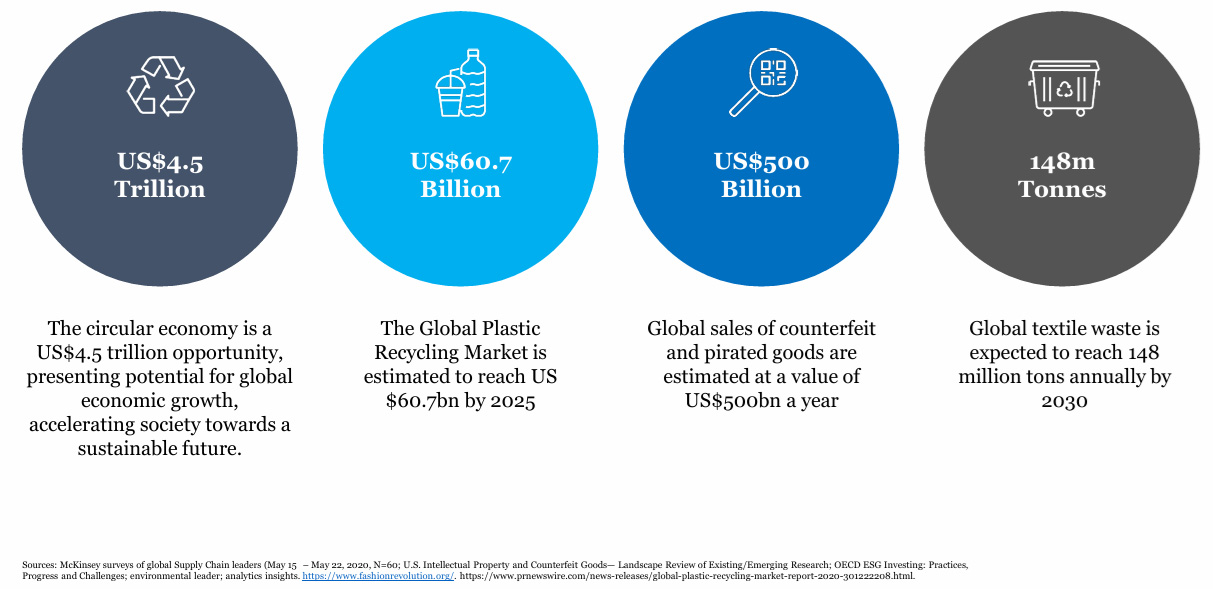
The circular economy represents an estimated $4.5 trillion opportunity, and SMX is positioning itself as a foundational enabler. By allowing materials to carry verifiable data — including recycling history and carbon impact — SMX aligns sustainability goals with financial incentives.
The company even enables carbon and plastic credits to be tangibly linked to physical materials, turning verification into a tradeable asset rather than a compliance cost.
Why Pay Attention Now?
SMX is not an early-stage concept. Its technology has been operational at national scale for more than a decade, originally developed by the Israeli Atomic Energy Commission and deployed by the Israeli government. The leadership team brings decades of experience in technology commercialization and global brand execution.
Blockchain has already created multiple billion-dollar companies. SMX represents a different angle: blockchain at the physical layer of the economy, where materials like gold and silver demand absolute certainty.
Let’s take a look at why SMX should be on your watchlist:
- SMX is NOT an early-stage development company. They have the assets to exploit leadership in facilitating client companies to prove commitments to industrial supply chain efficiencies are met.
- Entire industries are being mandated, not encouraged, to transition toward a more ethical and transparent future.
- SMX’s maturation is positioning the company to be one of the most important contributors to building the circular economy – a $4.5 trillion opportunity.
- Frost & Sullivan has issued a $6.50 price target and has awarded the company the Frost & Sullivan award for enabling sustainable supply chain management and a low carbon footprint with its technology.
- Several catalysts including high inflation, climate change, and legislation are driving the transition to sustainable practices—creating new momentum for companies that reduce, reuse and recycle resources, and new opportunities for investors.
- As policymakers worldwide respond to a rising tide of climate activism and extreme weather events, the concept of the circular economy has become a key lever in the climate action tool kit.
We live in a rapidly changing world. Technological innovations affect millions of people, and this emerging company is doing things today, with tomorrow in mind.
SMX believes it is the only technology available that has tangibly demonstrated a full transparent circularity successfully! The company is giving materials a memory of their origination and history, so it can recycle, reused, and authenticated multiple times.
The Problem
Whether society has come to terms with it or not, consumers are the driving force of a successful business. From the mom-and-pop shop to the conglomerate, the supply of potential customers is abundant, allowing everyone a slice of the pie. Businesses have the luxury of being able to produce so much, sadly leading to immense waste.
This has caused a need for regulators to discover better ways for these producers to squander less. New laws in the United States and European Union incentivize green practices. Yet companies have difficulty complying with these new laws and revert back to old habits like purchasing raw materials instead of recycled ones. Not only does it hurt their environmental, social, and governance (ESG) scores, but it forces them to depend upon expensive outsourcing.
As the year approaches 2025, many organizations and manufacturers must reassess their commitment to sustainable packaging. The original goals-such as making 100% of packaging reusable, recyclable, or plastic-free-were often adopted without thorough vetting by R&D, supply chain, quality, procurement, and manufacturing teams. While popular with consumers and beneficial to brand perception, these pledges are proving technically and economically unfeasible in the short term.
The European Commission recently announced an infringement procedure against all 27 EU Member States for failing to meet legally binding collection and recycling targets, underscoring the global scale of the problem. The Packaging and Packaging Waste Directive, which expected Member States to recycle 55-80% of packaging waste by the end of 2008, has been widely missed. Even today, countries across Europe are laboring to meet these targets, with the vast majority still falling short of the Waste Framework Directive’s goals set for 2020.
- The global economy is growing, reaching an unprecedented $94 trillion in 2021 – with rising population, urbanization, and living standards. The challenge now is to keep up this momentum in a way that works for people and the planet.
- Looking at today’s consumption levels, sustaining our current growth trajectory would require the ecological resources of 2.3 planets by 2050!
Fortunately, there is a solution
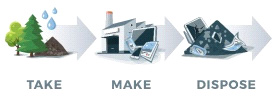
We can decouple our world’s growth from the consumption of the Earth’s resources by shifting from a linear “take, make, waste” economy to a circular “reduce, reuse, recycle” one. This is a circular economy.
The circular economy is a new way of looking at the relationships between markets, customers, and natural resources.
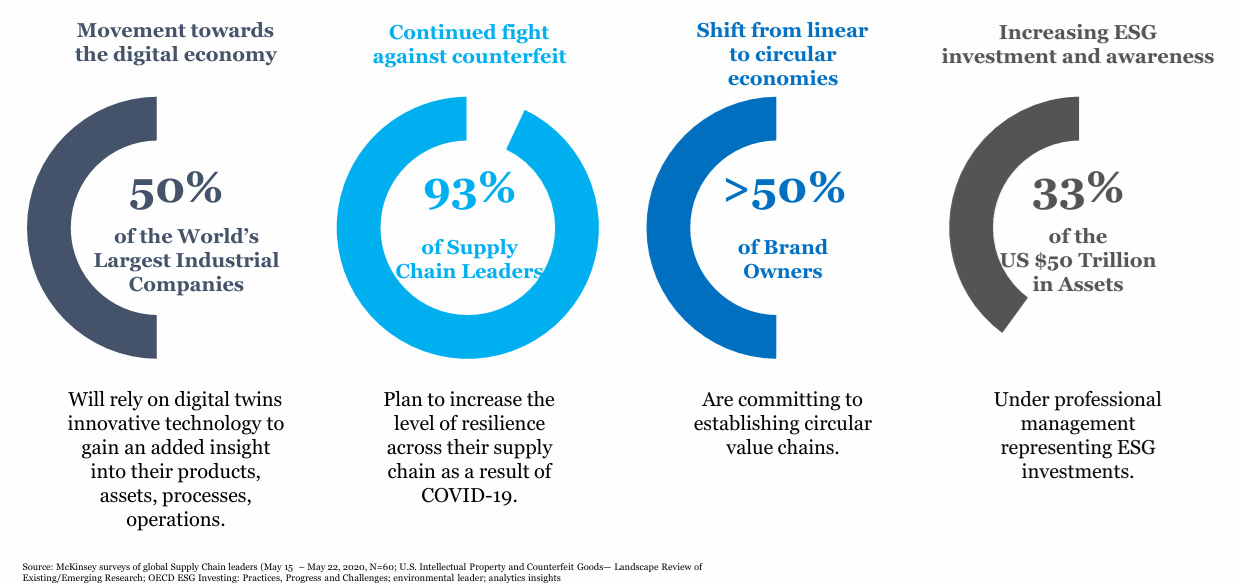
The circular economy moves away from the traditional “take-make-dispose” economic model to one that is regenerative by design, with the goal of retaining as much value as possible from resources, products, parts and materials to create a system that allows for longer life, optimal reuse, refurbishment, remanufacturing and recycling.
Companies who implement the circular economy concentrate on rethinking products and services using principles based on durability, renewability, reuse, repair, replacement, upgrades, refurbishment, and reduced material use.
By applying these principles, companies can design out waste, increase resource productivity and decouple growth from natural resource consumption.
From in the Dark to Informed Intelligence
There are moments the ground shifts beneath our feet. Suddenly, the entire global landscape changes, and business can no longer operate in the way it did before. Today, we are experiencing that change.
That is why SMX decided to find a new way to unlock knowledge – to help counter the lack of transparency and create a system where bad actors have nowhere to hide.
With ‘augmented materials,’ you can know the granular detail of a material – its provenance, its purity, its integrity. That way, transparency can be built-in, and industry can gain the intelligence it needs to work in smarter and more productive ways – linking parts of the value chain and enabling use, reuse and reuse again to realize the potential of materials.
This is a system designed for the 21st century economy. A system that is highly innovative and can empower businesses to build the real-world circular economy. A system that can help change the way we operate from the inside out. The system within.
The “circular economy” is considered one of the biggest business opportunities of our lifetime to help the world squander less.
“Circular economy” is a concept described by its supporters as the biggest economic opportunity since the industrial revolution. They peg its scale at $1 trillion by 2025 and $4.5 trillion by 2030.
By digitizing objects on the fast-growing blockchain, Security Matters (NASDAQ: SMX) has a mission to make the transition to a “circular economy” positive, productive, and profitable for everyone in the value chain – and for the planet.
SMX is the next generation solution to address the anti-counterfeit, brand protection, client liability and track and trace markets. The company has developed a suite of integrated solutions to solve both authentication and track and trace challenges in order to uphold supply chain integrity and provide quality assurance and brand accountability to producers of goods.
****Recent News:
SMX and TruCotton Collaborate to Deliver a New Standard for Cotton Fiber Traceability
NEW YORK CITY, NEW YORK / ACCESS Newswire / January 26, 2026 / Markets price proof. They always do, especially in global supply chains where claims have historically traveled faster than verification. That transition rarely announces itself in real time. It shows up first in procurement standards, then in compliance language, and finally in capital allocation decisions.
Today, tariffs, geopolitical uncertainty, and fragmented supply chains have introduced both sovereign risk and the potential for brand provenance destruction. In that environment, materials that cannot defend their origin or integrity begin to carry friction. The competitive consequence is straightforward. Those who can prove what they are and where they came from gain leverage quietly, while others absorb cost, delay, and skepticism.
Cotton is now entering that phase. Much like precious metals, commodities, and other agricultural markets before it, verification is no longer about branding. It is about managing exposure under scrutiny. That reality does more than contextualize the announced collaboration between SMX (NASDAQ:SMX) and TruCotton™. It explains why the development matters beyond a single supply agreement.
Why TruCotton™ Signals Real Adoption
TruCotton™ is a century-old, independent U.S. cotton producer with long-standing relationships across growers, processors, and buyers who value consistency and provenance. Its business was built on execution rather than narrative, which makes it a meaningful participant as verification expectations rise.
That independence matters. TruCotton™ is not an SMX-owned platform, nor is it part of a captive ecosystem. It is an established operator choosing to integrate verification infrastructure because the economics are shifting. As scrutiny increases, uncertainty becomes costly, and provable origin becomes a competitive advantage rather than a compliance exercise.
For SMX, this type of partner reflects how adoption scales. Verification does not become infrastructure through pilots alone. It becomes infrastructure when real producers with real volume decide that proof is no longer optional. Here’s why that shift is underway.
Cotton and the Hidden Cost of Ambiguity
Cotton supply chains are especially vulnerable to misrepresentation once the fiber leaves the farm. Country-of-origin claims blur quickly. Certifications rely heavily on documentation that becomes harder to enforce downstream. By the time cotton is spun, blended, or finished, physical differentiation disappears.
That ambiguity has historically been absorbed as operational noise. Today, it is turning into exposure. Regulatory pressure, brand accountability, and buyer due diligence are converging, and gaps that once went unnoticed are now being tested. What was once a documentation problem is becoming a material risk issue.
This is the problem SMX was designed to address.
Verification That Travels With the Material
SMX embeds a secure molecular marker directly into raw materials, creating a persistent digital identity that remains linked to the physical cotton throughout its lifecycle. This is not a label or a tag that can be removed or swapped. It is a physical-digital bond that travels with the material itself.
For TruCotton™, this extends provenance beyond the farm gate. The cotton remains verifiably TruCotton™ after processing, blending, and manufacturing. Origin can be authenticated. Chain of custody can be validated. Claims can be proven without relying on trust or manual audits.
For brands and buyers, this capability is becoming essential. As disclosure requirements tighten and enforcement shifts from voluntary reporting to auditable proof, verification at the material level moves from advantage to necessity.
Infrastructure Without Ownership Risk
From an investor’s perspective, the structure of this collaboration is as important as the technology.
SMX already operates proprietary verification platforms across other material categories. TruCotton™ sits outside that framework by design. Its independence reinforces credibility and demonstrates that SMX’s verification layer is portable rather than confined to owned platforms.
This model scales without asset intensity. It compounds value through adoption rather than consolidation and creates optionality across industries facing similar verification challenges. TruCotton™’s participation validates that strategy in one of the most scrutinized natural material markets globally.
The broader implication is straightforward. Materials that can prove what they are, where they came from, and how they moved will command trust and access. Materials that cannot will face skepticism, friction, or exclusion.
In supply chains like these, durability beats noise, and proof becomes currency long before it becomes policy.
NEWS
SMX and TruCotton Collaborate to Deliver a New Standard for Cotton Fiber Traceability
4 days ago
SMX Enables Luxury, Fashion, and Material Brands to Protect Value at the Source
4 days ago
4 days ago
Why SMX Became a Different Market Story in 2025-and Why That Shift Carries Into 2026
7 days ago
SMX and Gold’s New Gold Standard: How Verification Is Replacing Assumption in Global Markets
7 days ago
Why the Market Looked at SMX Differently in 2025, and Shouldn’t Overlook It in 2026
7 days ago
SMX Fully Financed Through the End of First Quarter 2027
7 days ago
SMX Is Building Verification as Infrastructure, Not a Feature
Jan 22, 2026
Why SMX Is Rewriting the Rules of Global Commerce by Making Proof Physical
Jan 22, 2026
Kraken Isn’t the SMX Infrastructure Finish Line, It’s a Required Layer
Jan 22, 2026
SMX Has Entered 2026 Fully Financed Through the End of First Quarter 2027
Jan 22, 2026
How SMX Helps Fashion Reclaim Control Over Inventory, Production, and Recycled-Content Proof
Jan 21, 2026
Jan 21, 2026
When Precious Metals Stop Being Anonymous: How SMX Is Rethinking Gold’s Journey
Jan 21, 2026
Why SMX’s Kraken Move Creates the PCT Rails for Verified Value in a Digital Economy
Jan 20, 2026
Why Materials That Can Verify Themselves Are No Longer Optional
Jan 16, 2026
SMX: Why One Fake Gold Bar Could Spark a Trillion-Dollar Reckoning
Jan 16, 2026
SMX Implements Board-Approved Treasury Framework Aligned With Material Verification Strategy
Jan 16, 2026
SMX Announces Opening of Kraken Account as Part of Board-Approved Treasury Strategy
Jan 16, 2026
The Bull Case for SMX, Built on Proof, Not Noise
Jan 15, 2026
SINCERELY,

DISCLAIMER
THIS WEBSITE/NEWSLETTER IS OWNED SUBSIDIARY BY DEDICATED INVESTORS, LLC.
OUR REPORTS/RELEASES ARE A COMMERCIAL ADVERTISEMENT AND ARE FOR GENERAL INFORMATION PURPOSES ONLY. WE ARE ENGAGED IN THE BUSINESS OF MARKETING AND ADVERTISING COMPANIES FOR MONETARY COMPENSATION. WE HAVE BEEN COMPENSATED A FEE OF TEN THOUSAND USD BY INTERACTIVE OFFERS LLC FOR A ONE DAY SMX AWARENESS CAMPAIGN. NEVER INVEST IN ANY STOCK FEATURED ON OUR SITE OR EMAILS UNLESS YOU CAN AFFORD TO LOSE YOUR ENTIRE INVESTMENT. THE DISCLAIMER IS TO BE READ AND FULLY UNDERSTOOD BEFORE USING OUR SERVICES, JOINING OUR SITE OR OUR EMAIL/BLOG LIST AS WELL AS ANY SOCIAL NETWORKING PLATFORMS WE MAY USE.PLEASE NOTE WELL: DEDICATED INVESTORS LLC AND ITS EMPLOYEES ARE NOT A REGISTERED INVESTMENT ADVISOR, BROKER DEALER OR A MEMBER OF ANY ASSOCIATION FOR OTHER RESEARCH PROVIDERS IN ANY JURISDICTION WHATSOEVER.RELEASE OF LIABILITY: THROUGH USE OF THIS WEBSITE VIEWING OR USING YOU AGREE TO HOLD DEDICATED INVESTORS LLC, ITS OPERATORS OWNERS AND EMPLOYEES HARMLESS AND TO COMPLETELY RELEASE THEM FROM ANY AND ALL LIABILITY DUE TO ANY AND ALL LOSS (MONETARY OR OTHERWISE), DAMAGE (MONETARY OR OTHERWISE), OR INJURY (MONETARY OR OTHERWISE) THAT YOU MAY INCUR. THE INFORMATION CONTAINED HEREIN IS BASED ON SOURCES WHICH WE BELIEVE TO BE RELIABLE BUT IS NOT GUARANTEED BY US AS BEING ACCURATE AND DOES NOT PURPORT TO BE A COMPLETE STATEMENT OR SUMMARY OF THE AVAILABLE DATA. DEDICATED INVESTORS LLC ENCOURAGES READERS AND INVESTORS TO SUPPLEMENT THE INFORMATION IN THESE REPORTS WITH INDEPENDENT RESEARCH AND OTHER PROFESSIONAL ADVICE. ALL INFORMATION ON FEATURED COMPANIES IS PROVIDED BY THE COMPANIES PROFILED, OR IS AVAILABLE FROM PUBLIC SOURCES AND DEDICATED INVESTORS LLC MAKES NO REPRESENTATIONS, WARRANTIES OR GUARANTEES AS TO THE ACCURACY OR COMPLETENESS OF THE DISCLOSURE BY THE PROFILED COMPANIES. NONE OF THE MATERIALS OR ADVERTISEMENTS HEREIN CONSTITUTE OFFERS OR SOLICITATIONS TO PURCHASE OR SELL SECURITIES OF THE COMPANIES PROFILED HEREIN AND ANY DECISION TO INVEST IN ANY SUCH COMPANY OR OTHER FINANCIAL DECISIONS SHOULD NOT BE MADE BASED UPON THE INFORMATION PROVIDED HEREIN. INSTEAD DEDICATED INVESTORS LLC STRONGLY URGES YOU CONDUCT A COMPLETE AND INDEPENDENT INVESTIGATION OF THE RESPECTIVE COMPANIES AND CONSIDERATION OF ALL PERTINENT RISKS. READERS ARE ADVISED TO REVIEW SEC PERIODIC REPORTS: FORMS 10-Q, 10K, FORM 8-K, INSIDER REPORTS, FORMS 3, 4, 5 SCHEDULE 13D.DEDICATED INVESTORS LLC IS COMPLIANT WITH THE CAN SPAM ACT OF 2003. DEDICATED INVESTORS LLC DOES NOT OFFER SUCH ADVICE OR ANALYSIS, AND DEDICATED INVESTORS LLC FURTHER URGES YOU TO CONSULT YOUR OWN INDEPENDENT TAX, BUSINESS, FINANCIAL AND INVESTMENT ADVISORS. INVESTING IN MICRO-CAP AND GROWTH SECURITIES IS HIGHLY SPECULATIVE AND CARRIES AND EXTREMELY HIGH DEGREE OF RISK. IT IS POSSIBLE THAT AN INVESTORS INVESTMENT MAY BE LOST OR IMPAIRED DUE TO THE SPECULATIVE NATURE OF THE COMPANIES PROFILED.THE PRIVATE SECURITIES LITIGATION REFORM ACT OF 1995 PROVIDES INVESTORS A SAFE HARBOR IN REGARD TO FORWARD-LOOKING STATEMENTS. ANY STATEMENTS THAT EXPRESS OR INVOLVE DISCUSSIONS WITH RESPECT TO PREDICTIONS, EXPECTATIONS, BELIEFS, PLANS, PROJECTIONS, OBJECTIVES, GOALS, ASSUMPTIONS OR FUTURE EVENTS OR PERFORMANCE ARE NOT STATEMENTS OF HISTORICAL FACT MAY BE FORWARD LOOKING STATEMENTS. FORWARD LOOKING STATEMENTS ARE BASED ON EXPECTATIONS, ESTIMATES, AND PROJECTIONS AT THE TIME THE STATEMENTS ARE MADE THAT INVOLVE A NUMBER OF RISKS AND UNCERTAINTIES WHICH COULD CAUSE ACTUAL RESULTS OR EVENTS TO DIFFER MATERIALLY FROM THOSE PRESENTLY ANTICIPATED. FORWARD LOOKING STATEMENTS IN THIS ACTION MAY BE IDENTIFIED THROUGH USE OF WORDS SUCH AS PROJECTS, FORESEE, EXPECTS, WILL, ANTICIPATES, ESTIMATES, BELIEVES, UNDERSTANDS, OR THAT BY STATEMENTS INDICATING CERTAIN ACTIONS & QUOTE; MAY, COULD, OR MIGHT OCCUR. UNDERSTAND THERE IS NO GUARANTEE PAST PERFORMANCE WILL BE INDICATIVE OF FUTURE RESULTS. IN PREPARING THIS PUBLICATION, DEDICATED INVESTORS LLC HAS RELIED UPON INFORMATION SUPPLIED BY ITS CUSTOMERS, PUBLICLY AVAILABLE INFORMATION AND PRESS RELEASES WHICH IT BELIEVES TO BE RELIABLE; HOWEVER, SUCH RELIABILITY CANNOT BE GUARANTEED. INVESTORS SHOULD NOT RELY ON THE INFORMATION CONTAINED IN THIS WEBSITE. RATHER, INVESTORS SHOULD USE THE INFORMATION CONTAINED IN THIS WEBSITE AS A STARTING POINT FOR DOING ADDITIONAL INDEPENDENT RESEARCH ON THE FEATURED COMPANIES. THE ADVERTISEMENTS IN THIS WEBSITE ARE BELIEVED TO BE RELIABLE, HOWEVER, DEDICATED INVESTORS LLC AND ITS OWNERS, AFFILIATES, SUBSIDIARIES, OFFICERS, DIRECTORS, REPRESENTATIVES AND AGENTS DISCLAIM ANY LIABILITY AS TO THE COMPLETENESS OR ACCURACY OF THE INFORMATION CONTAINED IN ANY ADVERTISEMENT AND FOR ANY OMISSIONS OF MATERIALS FACTS FROM SUCH ADVERTISEMENT. DEDICATED INVESTORS LLC IS NOT RESPONSIBLE FOR ANY CLAIMS MADE BY THE COMPANIES ADVERTISED HEREIN, NOR IS DEDICATED INVESTORS LLC RESPONSIBLE FOR ANY OTHER PROMOTIONAL FIRM, ITS PROGRAM OR ITS STRUCTURE. DEDICATED INVESTORS LLC IS NOT AFFILIATED WITH ANY EXCHANGE, ELECTRONIC QUOTATION SYSTEM, THE SECURITIES EXCHANGE COMMISSION OR FINRA.